Reverse Osmosis Drinking Water for Richmond-Area Homes

An under-sink system with its own separate, dedicated faucet beside your kitchen faucet. Add it to whole-home filtration for $595, or the tankless version for $870. On its own, it’s $1,295 installed, or $1,570 tankless.

Girl drinking a glass of water filled at a separate, dedicated drinking-water faucet

What reverse osmosis does

Reverse osmosis pushes water through a semipermeable membrane with extremely small pores. Dissolved impurities that pass straight through a carbon filter are reduced by the membrane, which is why reverse osmosis is the standard home technology for drinking water specifically. EPA research has found it reduces PFAS (“forever chemicals”), peer-reviewed research shows it reduces microplastics, and it is commonly used to reduce fluoride and other dissolved minerals, including sodium. We describe all of that at the technology level; we don’t claim a percentage or a guarantee for any one contaminant.

Richmond-area water is relevant here. Chesterfield County, Henrico County and the City of Richmond all add fluoride, and the whole-home carbon system isn’t designed to reduce it. Chesterfield’s and Henrico’s 2025 reports found low levels of PFAS (“forever chemicals”) at some sources, while Richmond’s 2024 testing found none. The Your Local Water page has each utility’s figures.

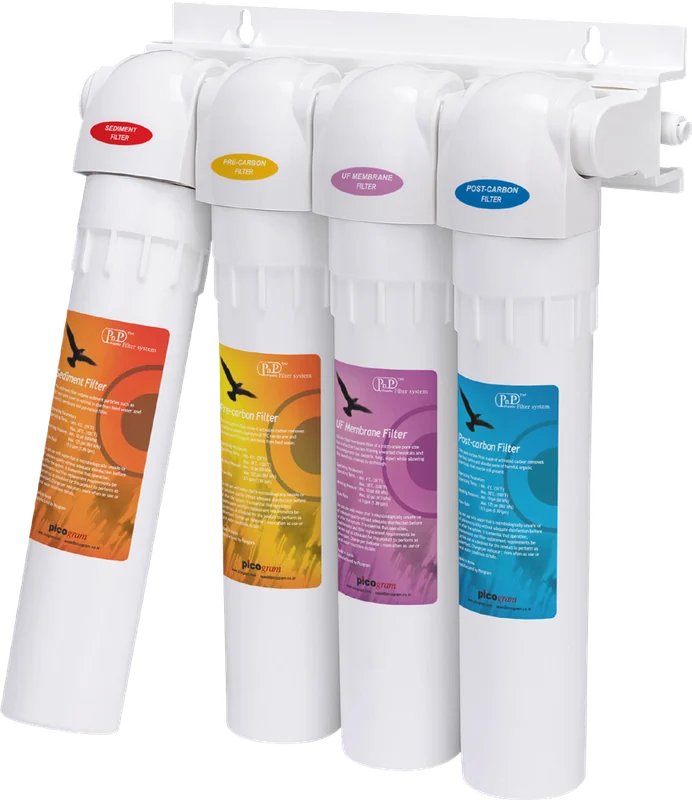
Puri 7 reverse osmosis unit with its four filter cartridges
The Puri 7’s four stages: sediment, pre-carbon, reverse osmosis membrane and post-carbon.

Why it lives at the kitchen sink

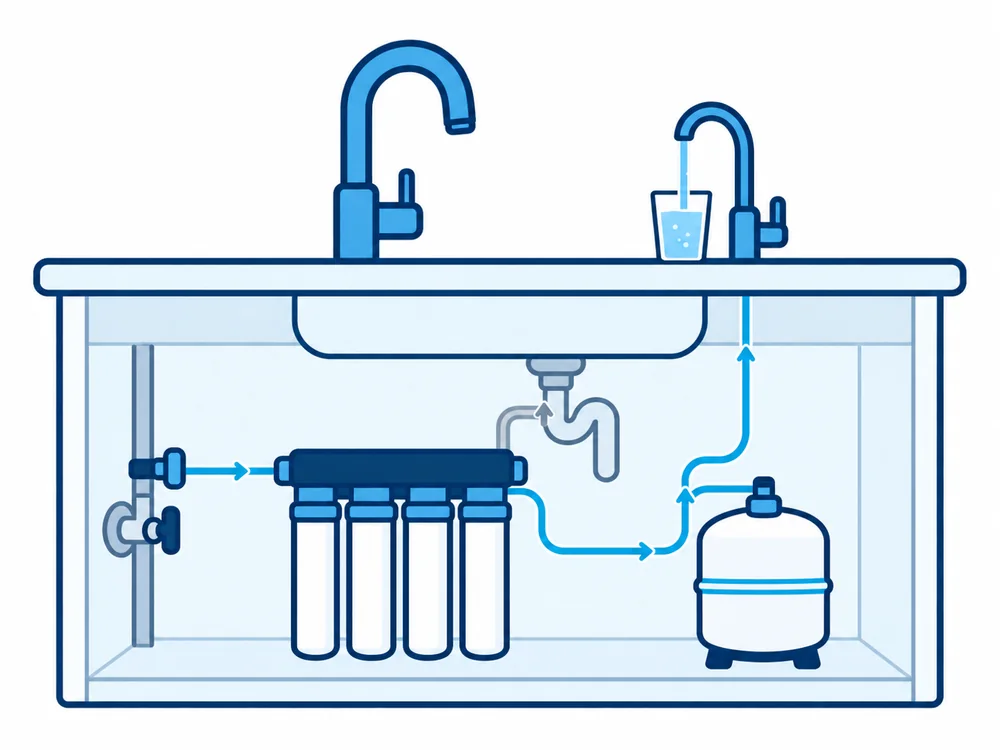
Reverse osmosis works slowly and sends some water to the drain as it filters, so it’s built for drinking water, coffee and ice rather than for the whole house. The system sits under the kitchen sink and feeds a separate, dedicated faucet installed beside your main kitchen faucet. Your regular faucet keeps supplying whole-home filtered water for everything else. Reverse osmosis faucets typically flow a little slower than a standard faucet, and that’s normal.

Under-sink reverse osmosis with a storage tank, feeding a separate, dedicated drinking-water faucet beside the kitchen faucet
Under the sink, feeding a separate, dedicated faucet beside your kitchen faucet.

Two systems to choose from

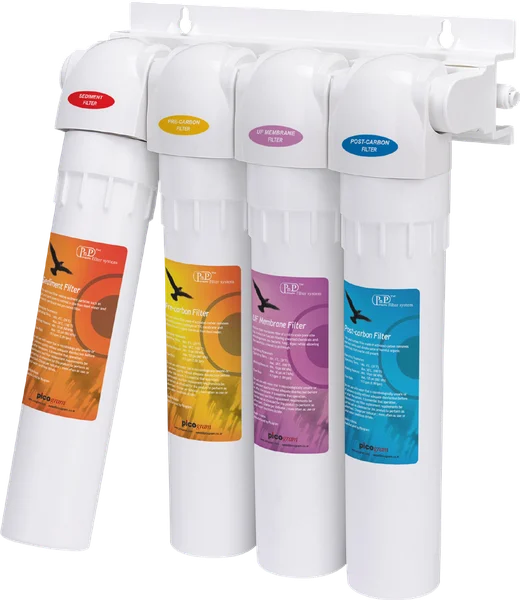
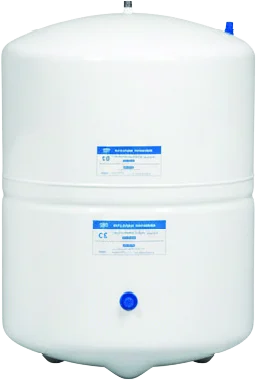
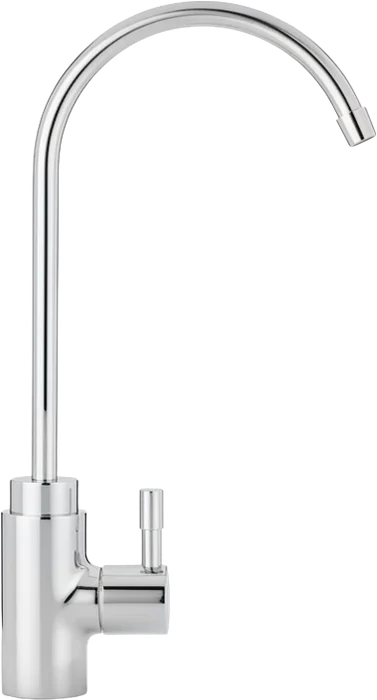
Puri 7 under-sink reverse osmosis unitPuri 7 storage tankThe chrome separate, dedicated faucet included with the Puri 7

Puri 7, with storage tank

+$595 added to whole-home filtration

$1,295 installed on its own

Output
50 gallons per day
Stages
Sediment, pre-carbon, TFC reverse osmosis membrane, post-carbon
Storage tank
3.2-gallon water capacity, keeps filtered water ready
Size
System 14 in. tall, 12 in. wide and 4 in. deep, plus the storage tank, 15½ in. tall
Comes with
A separate, dedicated chrome faucet
Faucet upgrades
Two more styles in other finishes, for an added cost. See the faucet options
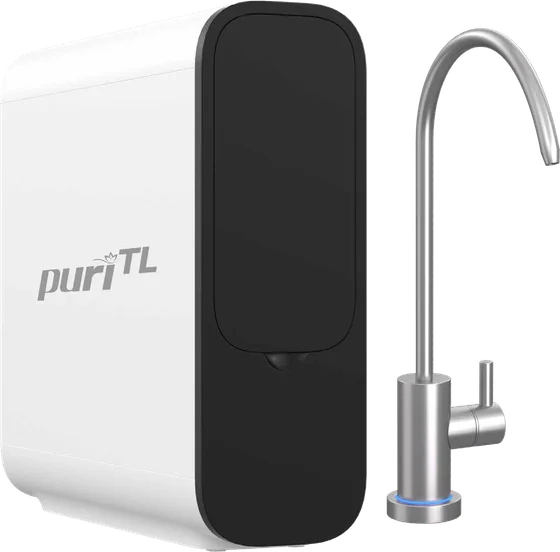
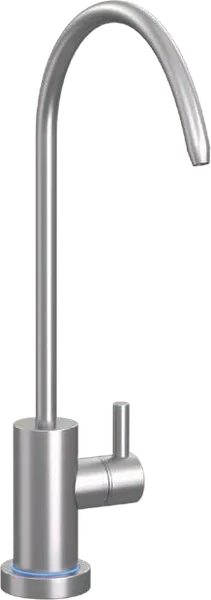
Puri TL tankless reverse osmosis unit beside its separate, dedicated smart faucet

Puri TL, tankless

+$870 added to whole-home filtration, $275 more than the Puri 7

$1,570 installed on its own

Output
600 gallons per day, on demand, with no storage tank
Efficiency
2:1 purified-to-drain ratio, automatic membrane flush
Display
Live water-quality (TDS) reading and filter-life indicators
Size
16 in. tall, 5 in. wide and 18 in. deep
Comes with
Its own separate, dedicated smart faucet, with a light ring that shows filter life
Needs
A standard 120V outlet under the sink

Either one on its own: both systems are available without whole-home filtration, at $1,295 installed for the Puri 7 and $1,570 for the Puri TL. Adding one to a whole-home install costs less because the plumber is already there. Request a standalone quote

The tankless price assumes an existing standard 120V outlet under the sink. If there isn’t one, an electrician will need to add it first. We don’t do electrical work, but we’re happy to recommend an electrician, or you’re welcome to use your own. Published prices can change if our equipment costs change, but the price on your written quote is the price you pay.

The separate, dedicated faucet

Reverse osmosis water comes from its own faucet beside your kitchen faucet; it does not come through the regular faucet. We use an existing opening in your sink or countertop, such as a soap-dispenser hole, at no extra cost. Stone countertops such as quartz or granite with no spare opening need a countertop specialist to drill one; our plumber doesn’t drill stone. We’re happy to recommend a specialist, or you’re welcome to use your own, and we’ll confirm the options for your kitchen before anything is scheduled.

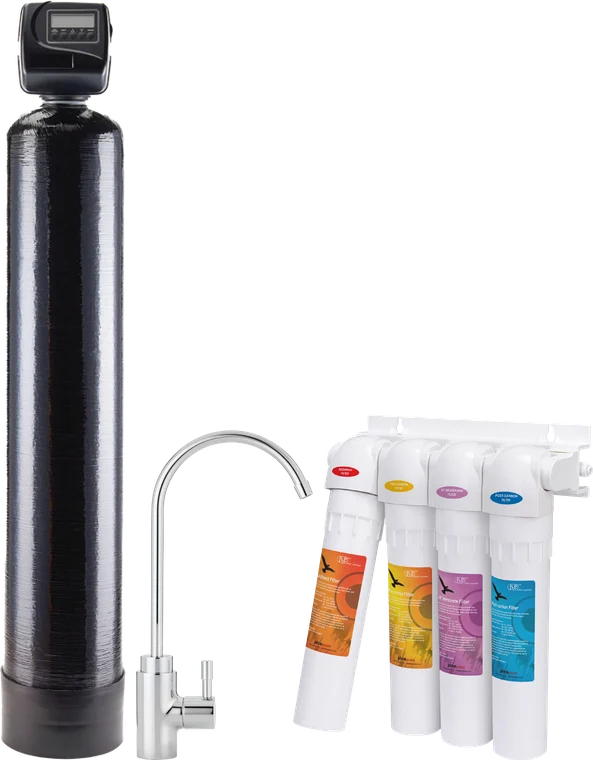
Whole-home filtration tank, a separate, dedicated drinking-water faucet and the Puri 7 reverse osmosis unit
The separate, dedicated faucet sits beside your main kitchen faucet.

Faucet options for the Puri 7

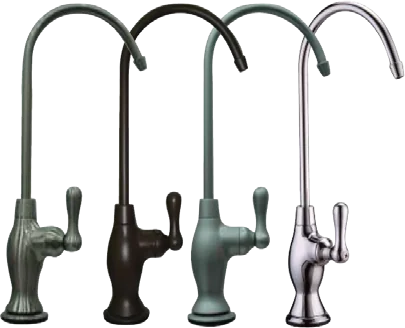
Every Puri 7 comes with a separate, dedicated chrome faucet. To match your kitchen, you can upgrade to one of two other styles for an added cost, which we include in your quote.

Chrome separate, dedicated reverse osmosis faucet, included with the Puri 7
IncludedChrome faucetComes with every Puri 7 at no extra cost.
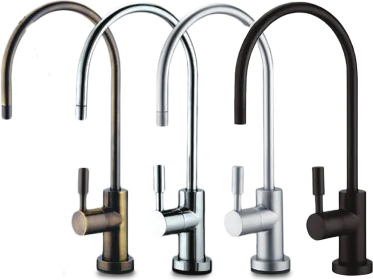
Style 888 separate, dedicated faucets in several finishes
UpgradeStyle 888A slim, modern gooseneck. Finishes: matte black, brushed nickel, chrome, oil-rubbed bronze or gloss black.
Style 905 separate, dedicated faucets in several finishes
UpgradeStyle 905A traditional look with a decorative lever. Finishes: matte black, brushed nickel, chrome or oil-rubbed bronze.

The Puri TL’s smart faucet

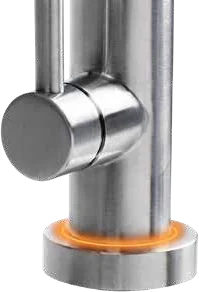
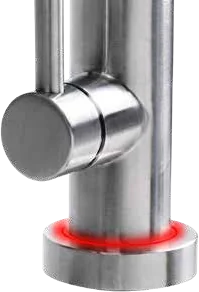
The Puri TL’s separate, dedicated smart faucet Faucet light ring glowing orange: filter life low Faucet light ring glowing red: time to replace the filter

The Puri TL comes with its own separate, dedicated smart faucet. It connects to the unit, and a light ring at its base shows filter life while the water runs:

  • Blue during normal use
  • Orange when filter life is low
  • Red when it’s time to replace the filter

The light turns off when the faucet isn’t in use. The manufacturer doesn’t list other finishes for this faucet; if finish matters for your kitchen, ask us and we’ll check before you order.

What installation involves

The plumber connects the system to the cold-water line under the sink, adds a drain connection for the water the membrane rejects, mounts the unit and, for the Puri 7, its storage tank in the cabinet, and installs the separate, dedicated faucet. When reverse osmosis is added to whole-home filtration, it goes in on the same visit. The plumber flushes the system and checks for leaks before leaving, and we’ll show you how it works.

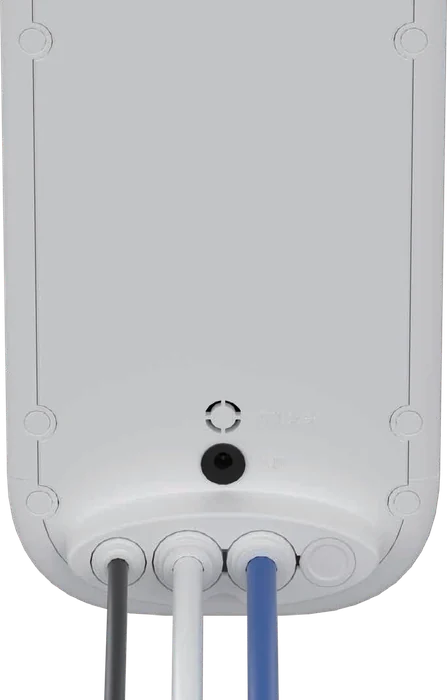
Back of the Puri TL: color-coded drain, inlet and filtered-water lines, plus faucet and power connections
The Puri TL’s color-coded quick-connect lines, with faucet and power connections above.

When an installation is more than standard

  • A tankless system with no outlet under the sink: an electrician adds the outlet first (we’re happy to recommend one, or use your own)
  • A stone countertop with no existing opening for the faucet: a countertop specialist drills it first (we’re happy to recommend one, or use your own)
  • A cabinet without room for the unit and, for the Puri 7, its storage tank
  • A home on septic: both the whole-home system and the reverse osmosis unit use a drain line, so septic systems get an extra look

If your kitchen needs more than a standard installation, we’ll let you know before anything is scheduled.

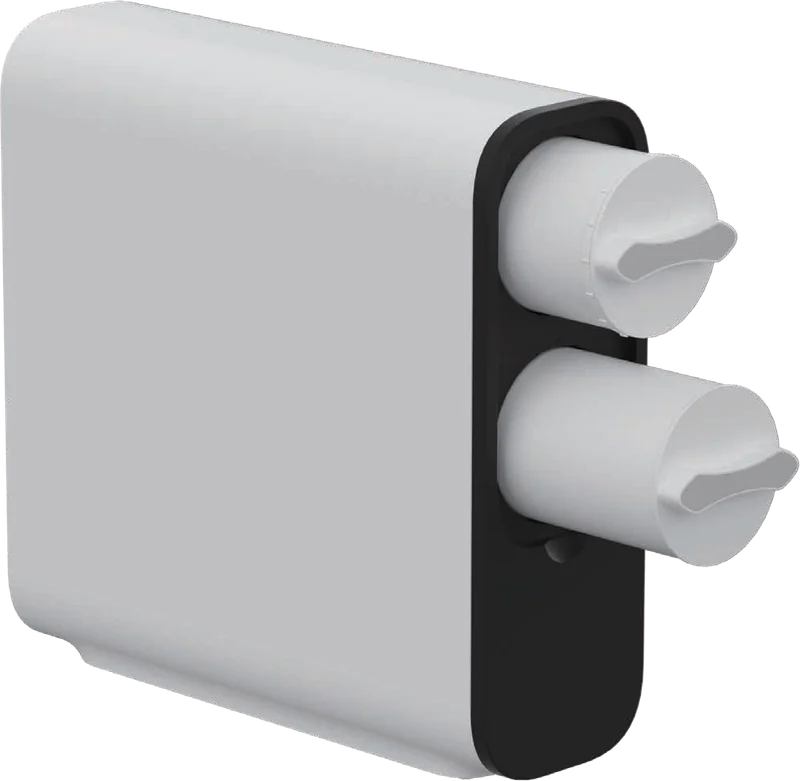
Puri TL with its two twist-lock filter cartridges
The Puri TL’s slim body, 5 in. wide, frees up cabinet space; its two cartridges twist in from the front.

What it isn’t for

Reverse osmosis filters the water at one faucet. If what bothers you is the chlorine smell in the shower or how water feels on hair and skin, that’s a whole-home filtration question, and reverse osmosis on its own won’t change it. It also isn’t a softener: scale on fixtures and spots on glassware come from hardness throughout the house, which the softener guide covers.

Woman with freshly washed hair
Shower water is a whole-home filtration question.

Common questions

Can reverse osmosis reduce fluoride?

Reverse osmosis is a technology commonly used to reduce fluoride and other dissolved minerals. We don’t state a specific amount of reduction. Fluoride helps prevent cavities, so if you have young children, it’s worth asking your dentist about fluoride from other sources.

Does reverse osmosis take the minerals out?

It reduces dissolved minerals along with everything else the membrane catches. An optional alkaline cartridge returns some minerals to the water and raises its pH, which some people prefer for taste. It mounts on its own filter head beside the system.

Tank or tankless?

The Puri 7 keeps a 3.2-gallon water capacity tank ready and needs no outlet. The Puri TL makes water on demand, frees up cabinet space, shows a live water-quality reading, and needs an outlet under the sink. If you fill a lot of bottles, pitchers and pots, the on-demand capacity is the reason to choose tankless. Sizes: the Puri 7 is 14 in. tall, 12 in. wide and 4 in. deep, plus a tank 15½ in. tall; the Puri TL is 16 in. tall, 5 in. wide and 18 in. deep.

Can I choose a different faucet finish?

Yes, with the Puri 7: it comes with a separate, dedicated chrome faucet, and styles 888 and 905 come in other finishes for an added cost. See the faucet options. The Puri TL comes with its own smart faucet; ask us about finishes for it.

Can I get reverse osmosis without the whole-home system?

Yes. Either system is available on its own: $1,295 installed for the Puri 7, or $1,570 for the tankless Puri TL. Request a standalone quote

Does it waste water?

Every reverse osmosis system sends some water to the drain as it filters; that’s how the membrane works. The Puri TL is rated at a 2:1 purified-to-drain ratio. The drinking water a household uses is a small share of its total water use, so the effect on a water bill is small.


Optional alkaline filter cartridge on its own filter head
The optional alkaline cartridge mounts on its own filter head.

Ready to learn what makes sense for your home?

Tell us a little about your home and we’ll help you determine the right next step.

TextCallQuote